Jay Nesbit is The Pharmacist Wordsmith® and author of Life Well Lived Books©
Journaling isn’t about being a good writer. It’s about getting honest with yourself — and that changes everything.
Most of us carry a constant stream of thoughts, worries, and half-formed ideas around with us all day. We rarely stop to look at them clearly. Journaling is simply the practice of slowing down enough to write them out — and in doing so, finally seeing them.
It doesn’t need to be long. It doesn’t need to be eloquent. Even a few lines a day can help you spot the patterns in your thinking, understand what’s holding you back, and start moving toward who you actually want to be.
“I can shake off everything as I write; my sorrows disappear, my courage is reborn.” — Anne Frank
Research backs this up: regular journaling has been shown to strengthen immune function and help manage stress, anxiety, and depression. When you put your inner world on paper, your emotions become more manageable and your thoughts more organized. Over time, you start to understand yourself in a deeper, more compassionate way.

Want to retire well?
Sign up here for twice-monthly tips on purposeful living—plus a FREE Retirement Cheat Sheet.
Try it now: your first (or next) journal entry
You don’t need a beautiful notebook or the perfect moment. Grab whatever you have and give yourself 5 minutes.
1 – Choose your format
Pen and paper, a notes app, a document on your laptop — whatever feels least intimidating is the right choice. You can always switch later.
2 – Set a timer for 5 minutes
A short time limit removes the pressure. When it feels easy, gradually increase it. Consistency matters far more than duration.
3 – Pick one prompt and write freely
Don’t edit. Don’t judge. Just let it flow. Choose whichever of these feels most alive to you right now:
Do you feel happy with your life right now? What comes up?
What did you make progress on today, even something small?
Who or what do you most aspire to be — and why?
What worry have you been carrying that you haven’t spoken out loud?
4 – Anchor it to your routine
Morning coffee, evening wind-down, after dinner — pick a time you’re already alone with your thoughts and pair journaling with it.
Not sure what else to write about? Here are eight areas worth exploring over time:
- Your daily activities
- Things that bring you joy
- Your goals and next steps
- Your five-year vision
- Worries and fears
- Solutions to current problems
- Affirmations and encouragements
- What you’re grateful for
One tip that makes a real difference: if a prompt resonates, don’t rush past it. Sit with the same question over several days. Your best insights tend to arrive slowly, as your brain keeps working on a question even after you’ve closed the notebook.
Why writing a few lines a day might be the most powerful thing you do for yourself
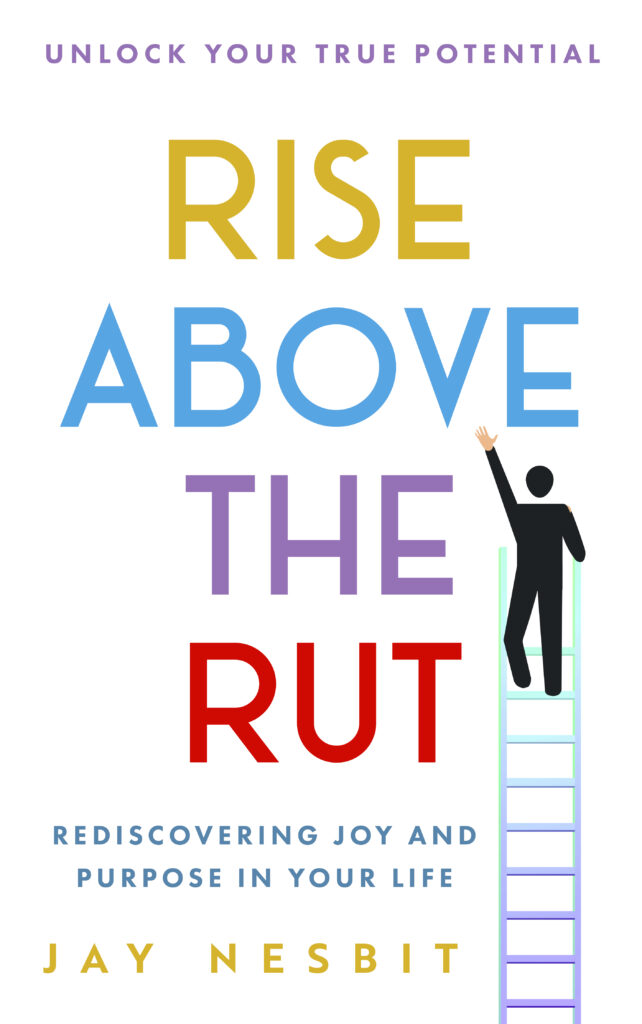
This post is drawn from chapter 4 of Rise Above the Rut — a practical, step-by-step guide to breaking the patterns holding you back and building a life with more clarity and purpose. Journaling and mindfulness are just the beginning of the journey inside.